


Hey there! As a supplier of Standard Surgical Gowns, I've been getting a lot of questions lately about the differences between gowns for open surgeries and laparoscopic surgeries. So, I thought I'd take a deep dive into this topic and share what I've learned.
First off, let's talk about open surgeries. These are the more traditional types of surgeries where the surgeon makes a large incision in the patient's body to access the internal organs. In open surgeries, there's a high risk of exposure to blood, bodily fluids, and other contaminants. That's why the surgical gowns used in open surgeries need to provide a high level of protection.
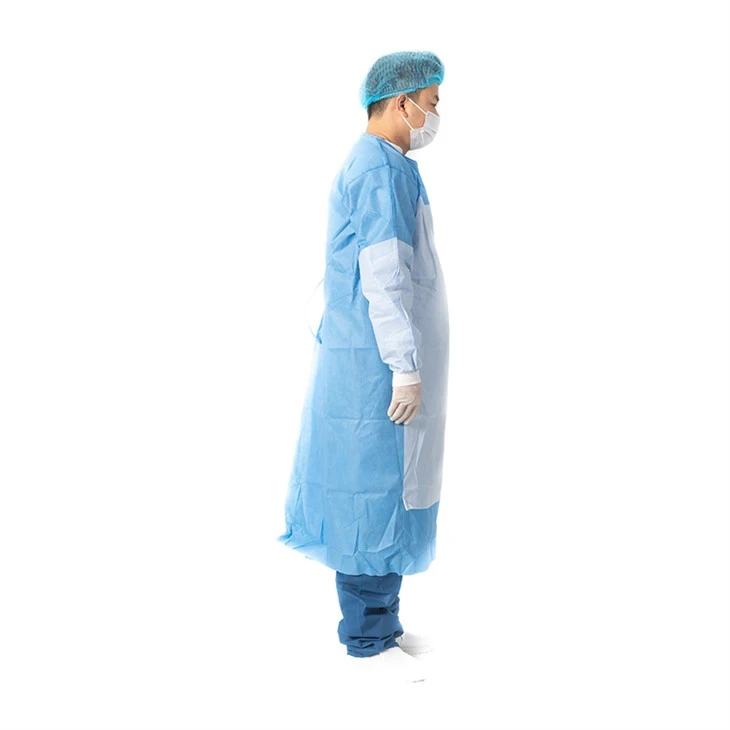
When it comes to Surgical Gown for open surgeries, we often recommend Sterile Fully Reinforced Surgical Gowns. These gowns are designed to be highly resistant to fluid penetration. They usually have multiple layers of fabric, including a waterproof outer layer and an absorbent inner layer. The reinforcement in these gowns is crucial, especially in areas that are most likely to come into contact with fluids, like the front and sleeves. This helps prevent any leakage or contamination, keeping both the surgeon and the patient safe.
Another important feature of surgical gowns for open surgeries is their durability. Since the surgeon may be in the operating room for several hours, the gown needs to withstand a lot of movement and manipulation. The seams of the gown should be strong and well-constructed to prevent tearing. And of course, the gown should fit properly to ensure maximum comfort and mobility for the surgeon.
Now, let's move on to laparoscopic surgeries. Laparoscopic surgeries are minimally invasive procedures where the surgeon uses small incisions and specialized instruments to perform the surgery. Unlike open surgeries, the risk of direct exposure to large amounts of blood and bodily fluids is relatively lower in laparoscopic surgeries. However, there's still a need for some level of protection.
For laparoscopic surgeries, Semi-barrier Surgical Gown Pack can be a great option. These gowns provide a moderate level of protection against fluids. They are usually made of a single layer or a combination of lightweight materials that offer some resistance to fluid penetration. While they may not be as heavy-duty as the gowns used in open surgeries, they are still effective in preventing most contaminants from reaching the surgeon's body.
One of the key differences between the gowns for open and laparoscopic surgeries is the level of flexibility. Laparoscopic surgeries require a lot of precise movements, so the gown needs to allow for a wide range of motion. The gowns for laparoscopic surgeries are often designed to be more lightweight and less restrictive, allowing the surgeon to move their arms and hands freely without any hindrance.
Another difference is the design. The gowns for open surgeries are typically more bulky and cover a larger area of the body to provide maximum protection. On the other hand, the gowns for laparoscopic surgeries are more streamlined and may have fewer layers, as they don't need to provide the same level of protection as the open surgery gowns.
It's also important to note that the choice of surgical gown depends not only on the type of surgery but also on the specific requirements of the surgical team. Some surgeons may prefer a certain type of gown based on their personal preferences and experience. For example, some may like a gown with more pockets for storing small instruments, while others may prioritize comfort and flexibility.
In addition to the differences in protection and design, there are also some similarities between the gowns for open and laparoscopic surgeries. Both types of gowns need to be sterile to prevent the spread of infections. They also need to meet certain quality standards and regulations to ensure the safety of the surgical team and the patient.
So, if you're in the market for surgical gowns for your operating room, it's important to consider the type of surgeries you perform and the specific needs of your surgical team. Whether you're doing open surgeries or laparoscopic surgeries, we have a wide range of Surgical Gown options to choose from.
If you're interested in learning more about our products or have any questions about which gown is right for your needs, don't hesitate to reach out. We're here to help you make the best decision for your surgical practice. Whether you're a small clinic or a large hospital, we can provide you with high-quality surgical gowns that meet your requirements.
In conclusion, there are definitely differences between standard surgical gowns for open surgeries and laparoscopic surgeries. These differences are mainly based on the level of protection needed, the flexibility required, and the design of the gown. By understanding these differences, you can make an informed decision when choosing the right surgical gowns for your operating room.
References

- Surgical gown industry standards and guidelines.
- Research studies on the effectiveness of different types of surgical gowns in preventing infections.